
Play Bow – The Ming Leopard
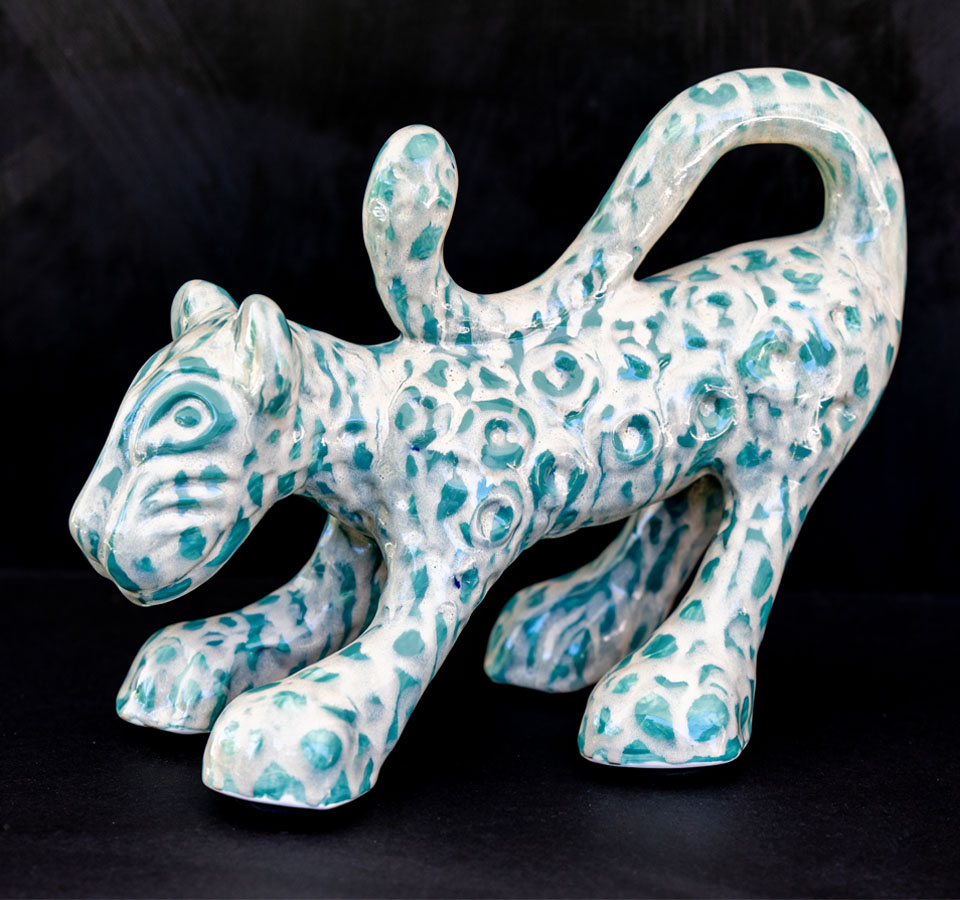
This series of ceramic sculptures is inspired by the elusive nature and patterned camouflage of the African and Cape leopard. They reflect the challenges wild animals face as they adapt to survive amidst human encroachment — navigating an increasingly complex landscape in an effort to avoid conflict or capture.
The leopard is captured in a “play bow” posture — a specific body language observed in leopards and other animals, signalling an invitation to play. It is a clear and universal expression of non-aggression, communicating openness, curiosity, and a desire to engage.
This gesture invites interaction through behaviours such as chasing, wrestling, or mock fighting, while simultaneously preventing misunderstanding. It clarifies that the interaction is not hostile, fostering trust and reinforcing social bonds. The play bow is a widely understood signal, sometimes even recognised across species.
Each sculpture is individually hand-painted and uniquely glazed, with a diverse range of colours and surface patterns. No two are the same. These varied finishes extend the idea of camouflage beyond the natural — exploring expression, individuality, and the shifting identities required for survival.
The glazing draws subtle reference from the refined white and richly decorated earthenware traditions of China’s Ming Dynasty (1368–1644), a period renowned for its mastery of cobalt underglaze blue and its role in the emergence of a global ceramic market.
Each sculpture is signed and numbered.
Size: 28 cm (H) × 37 cm (L) × 19 cm (W)


