Leopard Learns to Fly
Some stories are told in books. Others are passed down around fires, carried through generations by the voices that loved them. And then there are the ones cast in bronze, placed in the world for strangers to stumble upon and recognise something of themselves within.
Leopard Learns to Fly, a bronze sculpture, now in Noordhoek Farm Village.
If you find yourself passing by, stop for a moment.
Meet the leopard.
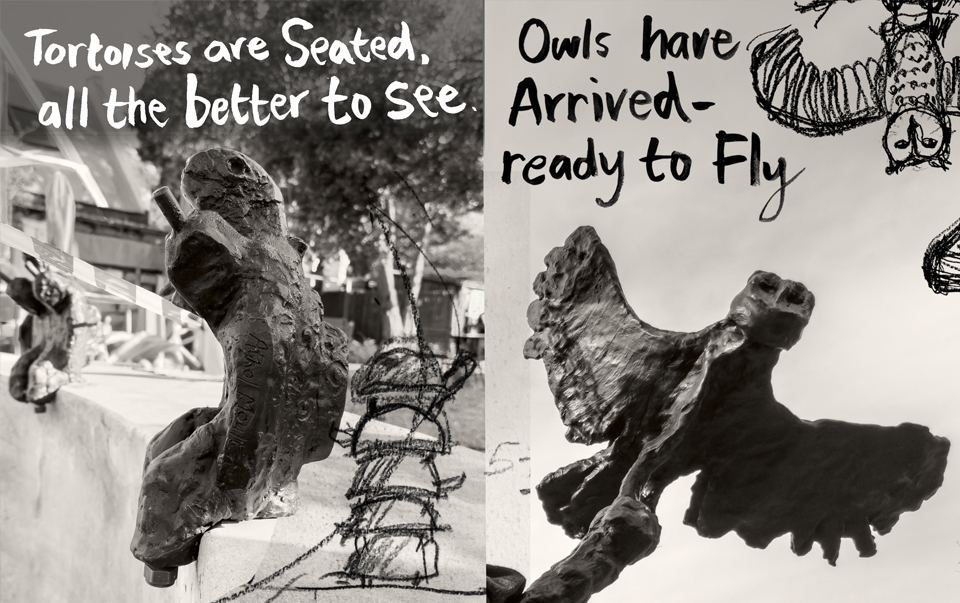
Meet the owls.
Meet the tortoises.
And if, for just a second, you find yourself believing that impossible things might be possible after all…
then perhaps the leopard’s plan is already working.
The plan…
is just beginning.

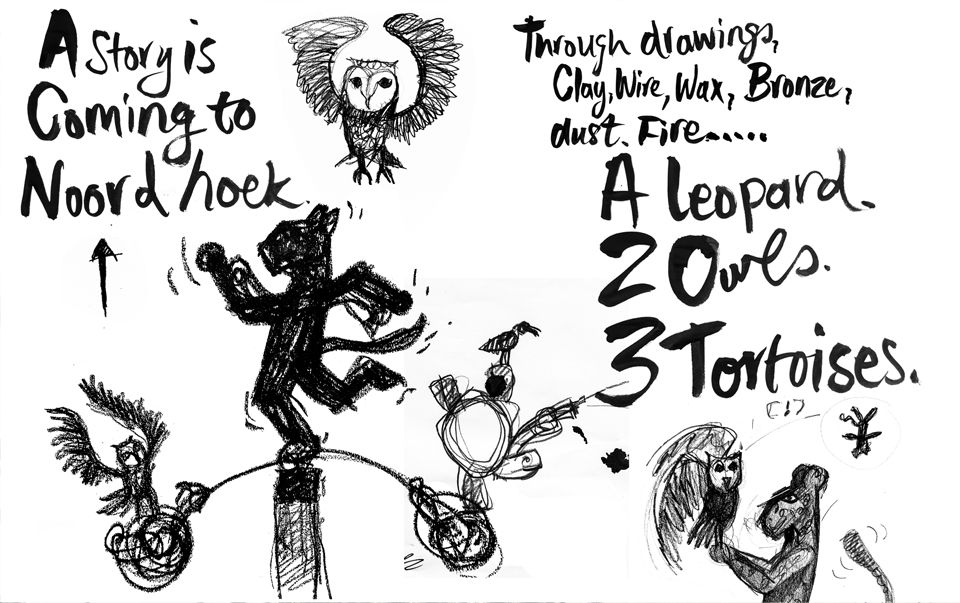
Leopard Learns to Fly is an unfolding body of work told through sculpture, drawing, painting, and story. Inspired by African folklore and oral storytelling traditions, the work explores imagination, persistence, vulnerability, and the quiet courage required to attempt the impossible.
At the centre of the narrative is a leopard who wants to do the one thing he cannot do: fly.
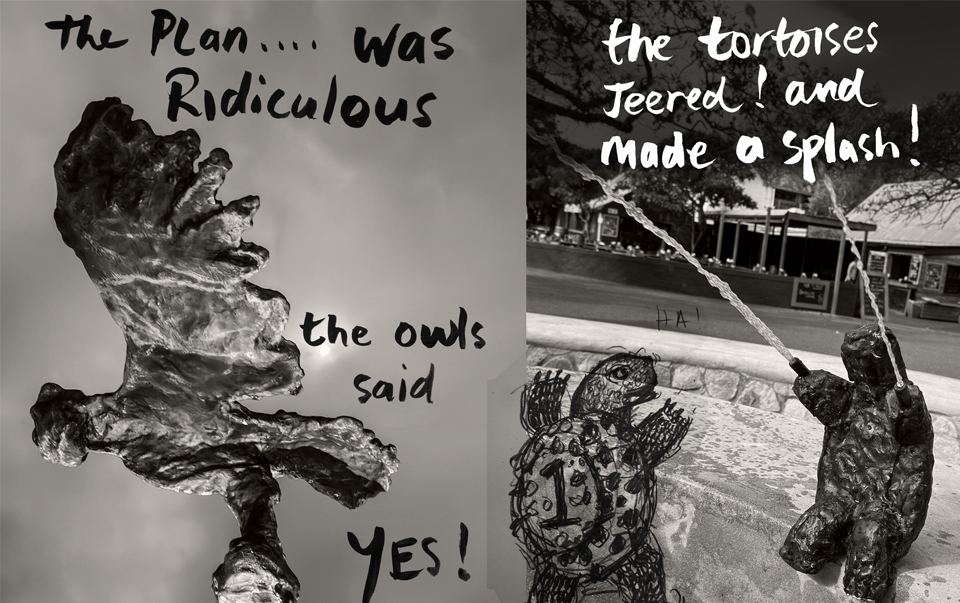
Through a series of encounters with owls, birds, tortoises, and other creatures, the leopard navigates repeated attempts, failures, and discoveries. Each work captures a moment within this evolving story – not simply as illustration, but as a way of exploring character, emotion, movement, and meaning through material.
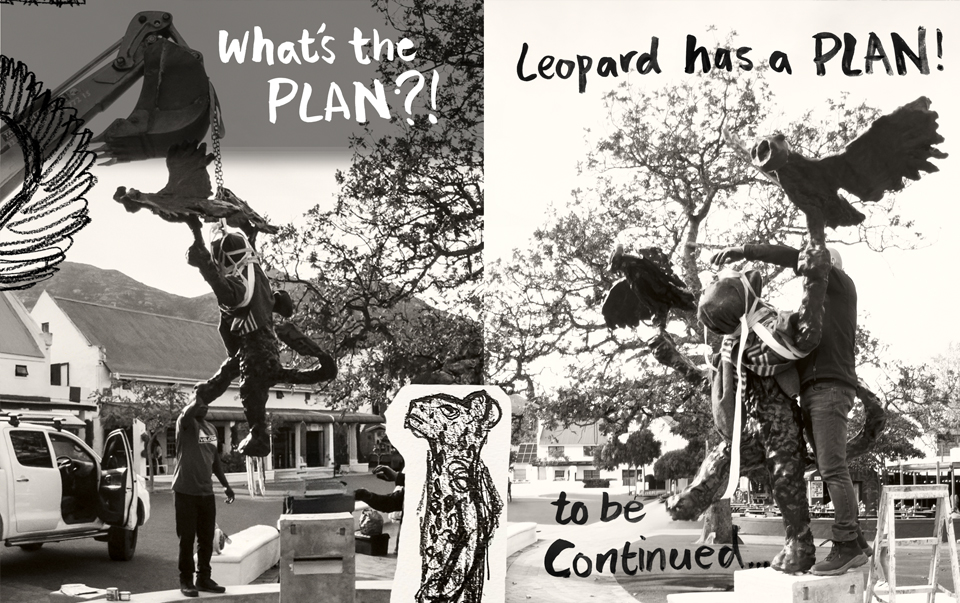
The central bronze sculpture depicts the leopard suspended between earth and sky, held aloft by owls. The work balances tension and weightlessness, creating a moment that feels both fragile and improbable. Rather than presenting triumph or conquest, the sculpture reflects ideas of cooperation, trust, and becoming – a creature lifted not by dominance, but by connection to others.
Working across clay, bronze, pencil, and paint, Athol Moult approaches storytelling as a physical process. Drawings become studies for sculptures, sculptures become fragments of narrative, and each piece contributes to a larger imagined world that continues to expand over time.
As with much of Moult’s practice, the work is deeply informed by place, observation, and human connection. The sculptures are conceived not as isolated objects, but as experiences that exist in dialogue with their environment and the people who encounter them. Through humour, imagination, and storytelling, the works invite viewers to recognise something of themselves within the animals and their journeys.
This is only the beginning of the story.
Scroll down to explore the creative process.